Seeing Food Systems Through a Bioregional Lens
When we talk about “local food,” what do we really mean by local? Is it a matter of kilometres from farm to plate, or something deeper…an understanding of how food, ecology, and community fit together within the landscapes we call home?
At the Canadian Centre for Food & Ecology (CCFE), we’re exploring the idea of bioregional food systems and why a bioregional lens can bring new ecological and social relevance to the “local food” conversation.
Defining a Bioregion
A bioregion is not a political boundary. It’s an ecological one, defined by the contours of land and water, the living systems that shape them, and the human cultures that have adapted to those places over time.
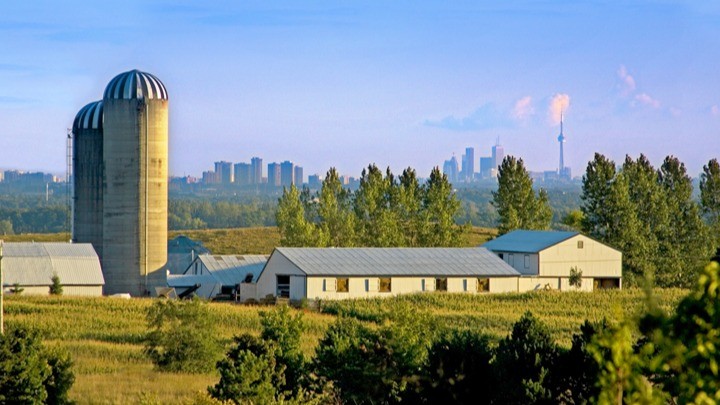
Think of the Okanagan Valley, where arid grasslands meet fruit orchards and vineyards; or the Greater Tkaronto Bioregion, shaped by the flow of the Great Lakes and home to millions who depend on shared water and land systems. Thinking in bioregional terms invites us to see our country not as a single food system, but as a mosaic of interdependent ecological communities, each with its own food realities, challenges and potential.
Why a Bioregional Lens Matters
A bioregion as an organizing unit gives people a sense of place and connection, a collective story that feels tangible, nearby and relevant. As Julie Davenson of the Soil & Climate Initiative explained as she was discussing the role of permaculture in the development of bioregional bio-based economies, “Bioregionalism is a hopeful endeavour for community.”
That hope is powerful, especially now. As the rhetoric around “supporting local” carries increasing cultural weight, we have an opportunity, and responsibility, to deepen public understanding of what local really means. The question is: how can we leverage this moment to build broader awareness of the ecological, social and economic benefits of bioregional organizing?
By focusing on how Food Systems function within their ecological setting, not just where food is produced, we can better align our food choices, business strategies, and policies with the regenerative capacity of the land itself.
This shift also helps translate complex systems thinking into something tangible and relevant. People can see and feel their bioregion, the rivers that feed their soil, the crops that shape their cuisine, the farmers and processors that anchor their local economy. It gives communities a clear frame for understanding how food systems work around them, and how they can make a difference right where they live.
Local Food Economies, Bioregion by Bioregion
Across the country, thousands of entrepreneurs and business leaders are building food economies that reflect the logic of their bioregions: grounded in place, community, and ecological awareness.
In Ontario, for instance, Dave Kranenburg, Founder and CEO of Green Circle Food Hub, is connecting farmers, food makers, and eaters through a cooperative model that spans the province. Operating out of Kendal Hills Farm, Green Circle strengthens the flow of ingredients within Ontario's bioregions, making it easier for communities to access fresh, sustainable food while supporting the producers who grow it.
In southern Saskatchewan, Derek and Tannis Axten of Axten Farms are restoring life to the Prairie soils of their 10,000-acre grain Farm. Their regenerative approach enhances biodiversity and builds resilience in a region where soil health is both an ecological and economic cornerstone. By cleaning and milling all of their grains on site, they add value locally, creating a fully bioregional grain economy from field to flour.
And on the Atlantic coast, Sheena Russell, Founder and CEO of Made with Local, is building a thriving food business rooted in community values and responsible sourcing. While many ingredients are drawn from her own region, others come from partner farms across Canada, each chosen for their care for soil, people and planet. Her snack bars tell a collective story of collaboration across bioregions, showing that local food isn’t about strict boundaries, but about relationships of reciprocity between places that nourish one another.
Each of these examples reveals how bioregional food economies can take shape when businesses see themselves as part of a local economy, beyond a network of transactions, but rather a network of care and reciprocity between people and the land.
From Local to Bioregional Thinking
A bioregional perspective also helps make systems change feel local. It gives people a way to see themselves in the story of food transformation. It reminds us that local food is not only about distance; it’s about relationship, to place, to people and to the living systems we depend on.
By working bioregion by bioregion, we can strengthen the connective tissue of Canada’s food economy, linking producers, processors, retailers and consumers in a shared commitment to the land and community.