At first glance, a farmers’ market might just seem like a place to pick up tomatoes or a bunch of beets. But for those who tend the land, and those who show up each week to eat from it, something much deeper is taking root. Beneath the bustling hum of shoppers and tents lies a quiet truth: farmers’ markets are not just vital economic lifelines for small-scale growers—they’re also a portal back to a deeper relationship with the earth, and with ourselves.
Most of the farmers you’ll meet at these markets aren’t just growing food. They’re cultivating something harder to quantify: connection. Many are deeply rooted in agroecological practices—working with nature rather than against it, farming in ways that are attuned to ecological cycles, biodiversity, and the wellbeing of both the land and the community. For these growers, the work is not just physical. It's both spiritual and necessary.
“You cannot be in nature without being touched and fed by it,” says Patrick Holden, Chief Executive of the Sustainable Food Trust in a recent video from the Conscious Food Systems Alliance. “When you start to have a profound realization that you are not separate from nature and these laws manifest in your own body… I think that brings about a shift of perception as to one’s relationship with the world in which one finds oneself.”
This shift can be felt in the fields and in the markets alike. At its core, agroecology is not only about what we grow, but how we grow it, and why. It recognizes farming as a relational act. The soil is not inert; it is alive. And when we care for it with respect, intention, and reciprocity, it cares for us in return.
In the same interview series with farmers done by COFSA, Alan Imai, President of Shumei America, puts it this way: “We believe that farming goes beyond just cultivating the land. It’s about cultivating the spirit as well. So we work with nature respectfully, thanking it and recognizing its sacredness in our everyday work.”
For many market farmers, this approach is inseparable from their own wellbeing. Farming in harmony with nature means tuning into rhythms—lunar cycles, weather shifts, seasons of abundance and rest. These are not just tools for planting. They are guides for living.
And while agroecological farming is hard work, many farmers speak of it as a kind of medicine. Time in the soil can offer perspective. Watching seeds become food can spark awe. Moving in rhythm with nature, rather than racing against it, can slow the nervous system. The work becomes a kind of remembering—of our place, our dependence, our responsibility.
When we show up at the market and take home a basket of food grown this way, we’re not just supporting sustainable agriculture—we're participating in a system of collective care. Not just healing the land, but letting the land begin to heal us.
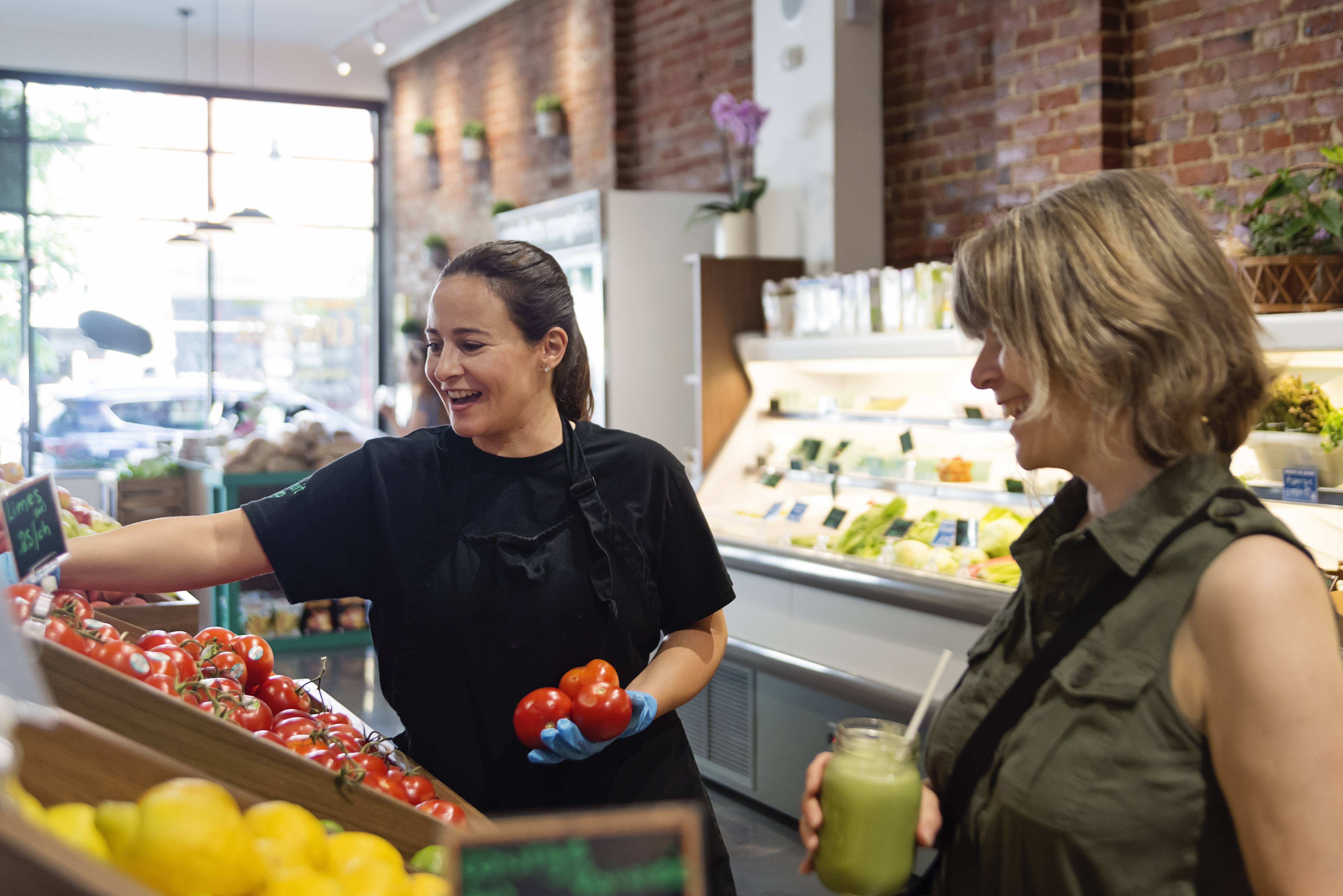
This is where the farmers’ market becomes more than a transaction. It becomes a site of reconnection. A space where you can taste the difference—not just in flavour, but in feeling. You are buying food that was grown with attention and care. You’re meeting the person who pulled the carrots from the ground. You’re making eye contact. Saying thank you. Asking questions. Learning what’s in season. Starting to orient yourself back to something real.
In a time when so many of us feel rushed, isolated, or disconnected, these weekly gatherings offer something rare: an invitation to slow down and root in. To eat food that is not only good for us, but good for the ecosystems it came from. To remember that our wellbeing is not separate from the wellbeing of the soil, the water, the bees, or the hands that grew our food.
Agroecological farming, then, is not just a method. It’s a mindset. A way of seeing the world as interconnected and alive. It's practical, reducing reliance on fossil fuels, regenerating soil health, building resilience in the face of climate change. But it’s also profoundly human. It invites us back into relationship—with the food we eat, the people who grow it, and the planet we all share.
That relationship can start simply. By showing up. By noticing what’s growing. By letting the flavours of this place wake something up in you.
The land is speaking. The farmers are listening. The invitation is open.