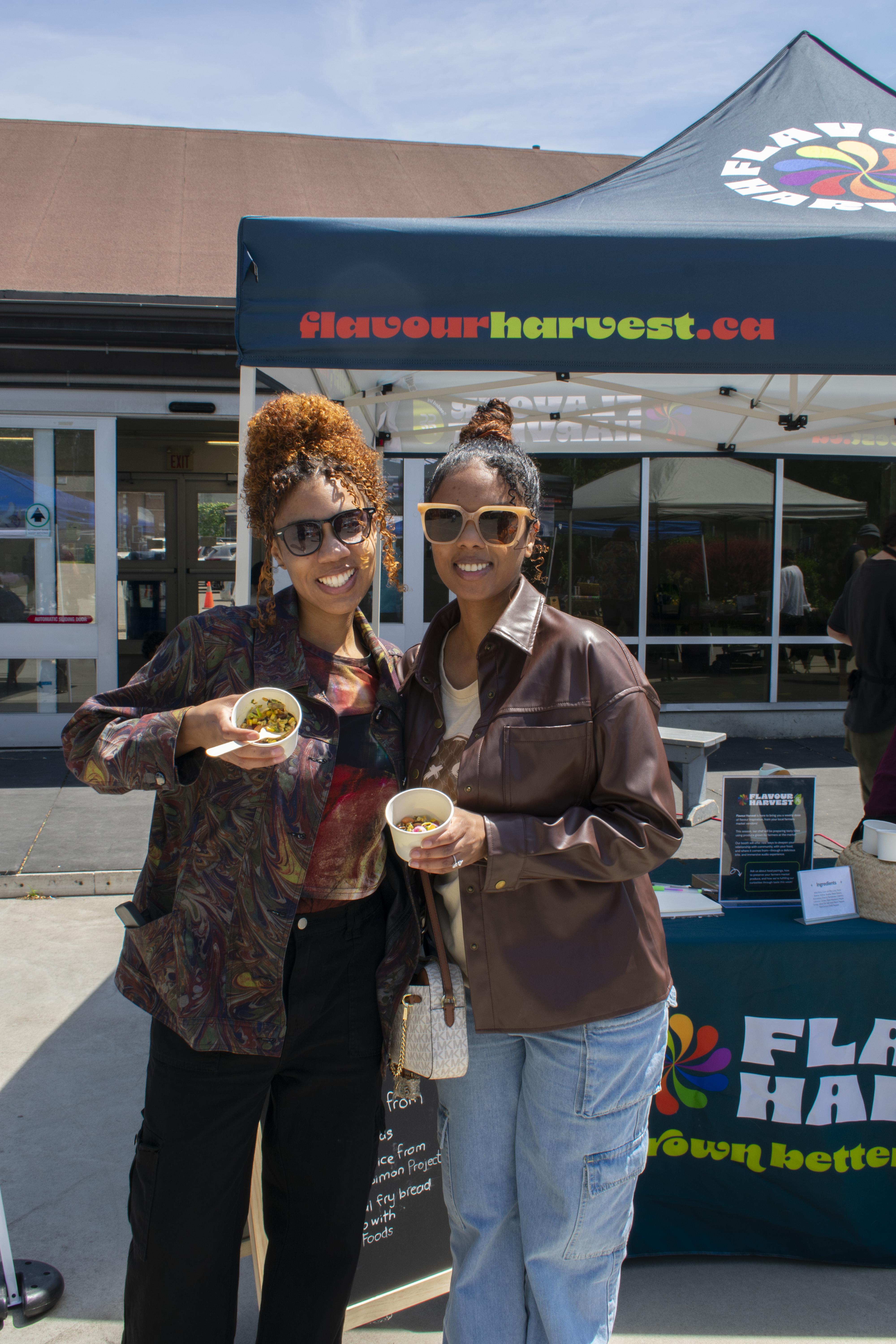
Farmers’ markets are the beating heart of local food systems, connecting people directly with the growers and producers who sustain them. Yet, despite their many benefits, markets continue to face challenges in attracting and retaining new shoppers. Perceptions of higher prices and the social pressure to buy can make some feel that “farmers’ markets aren’t for me.”
At a time when grocery prices are climbing and supply chains feel increasingly uncertain, the Canadian Centre for Food & Ecology (CCFE) set out to test a new approach: could leading with taste and creating meaningful, low-pressure social experiences help shift perceptions and drive stronger engagement with farmers’ markets?
The Flavour Harvest Markets Project built on lessons from the original Flavour Harvest pilot, scaling up to three Toronto neighbourhood farmers’ markets: Sorauren, Dufferin Grove, and Deeply Rooted, over summer 2025. Using behavioural science insights and an open-source Canadian market segmentation by OneEarth Living, specifically their Eco-Trends segment, we targeted socially motivated 26-45 year olds who value sustainability but don’t typically shop at farmers’ markets due to perceived barriers like convenience, cost uncertainty or social pressure.
The target Eco-Trend segment represents 15-20% of Canadians. We zeroed in on an age group within this segment considered of high potential but low-engagement.
Guided by input from farmers, market managers, and focus groups, we partnered with Reset, a team with over a decade of experience designing in-person events that foster connection, to create a welcoming, low-pressure market experience.
Focus groups provided a critical insight on this target segment: Farmers' Markets can be socially intimidating.
Tastings were central to this approach, offering a no-pressure way for shoppers to experience the freshness and flavour of local food firsthand. Each bite opened the door to curiosity, sparking conversations about why food grown in living soil tastes better and how soil health connects to human and planetary well-being. These moments were supported by simple, replicable recipes and clear direction to the vendors selling the featured ingredients, making it all the more easy for visitors to turn taste into action.
The project combined flavour-forward experiences, community connection, and behavioural nudges to spark curiosity and deepen local food engagement:
Using unsold or sensitive produce from farmers to create delicious, seasonal bites reduced food waste and showcased peak freshness. A Taste Test Challenge invited marketgoers to compare store-bought versus market produce, sparking curiosity and conversation about flavour, soil health, and nutrient density, backed by real Brix spectrometer readings.
To meet our audience’s need for social connection, we partnered with Reset to create an immersive audio journey that paired food tasting with music, storytelling, and interactive prompts. Participants enjoyed mindful moments, farmer interviews, and fun activities that deepened their connection to local food. A survey and gift basket draw encouraged reflection and ongoing engagement.
We highlighted the vendors behind each sampled ingredient and offered stamp cards that rewarded shoppers who bought three or more items with a chance to win a local food gift basket. QR codes linked to weekly updated seasonal recipes, encouraging repeat visits and continued engagement with market vendors.
Over three months and 31 market events, the Flavour Harvest booth drew over 10,500 visitors and offered 9,000+ samples.
”I definitely see how great this program is. Look - I sold out of asparagus with you guys sampling asparagus and telling people they can get it from me!’’ – JP, Samsara Fields, vendor at Sorauren Farmers’ Market
Key Takeaway: Leading with taste not only drew people in, it created a welcoming low-pressure space where shoppers felt free to explore, ask questions, and connect with vendors. After tasting, visitors approached vendors with confidence, already knowing what they wanted to buy. This shift reduced the pressure often felt at market booths and deepened genuine engagement between farmers and their customers.
The stamp card program was a simple but powerful tool for driving measurable behaviour change.
Out of 700 distributed cards, 163 were returned fully stamped, demonstrating that participants purchased 3 or more items per visit. This indicates not only higher basket sizes but also an active follow-through on the incentive
“The stamp card did make me feel like ‘okay we need to go get these 3 things, and I think we bought more than 3 things that day, and bought more after we handed over the card.” – Focus group participant
In addition to larger baskets, the program, built loyalty and retention: 77% of survey respondents said they were very likely to return to the market.
Over half of focus group participants returned to the booth, often bringing a friend to experience new samples and the audio journey.
Key takeaway: When shoppers associate markets with enjoyable, flavour-rich and welcoming experiences, they are more likely to buy more, come back and bring others.